
Findings
Four results, each with the figure it rests on and a plain-language reading. Every section says what the figure does not show, because that is where this kind of evidence is most often over-read.
01
Ability predicts effectiveness
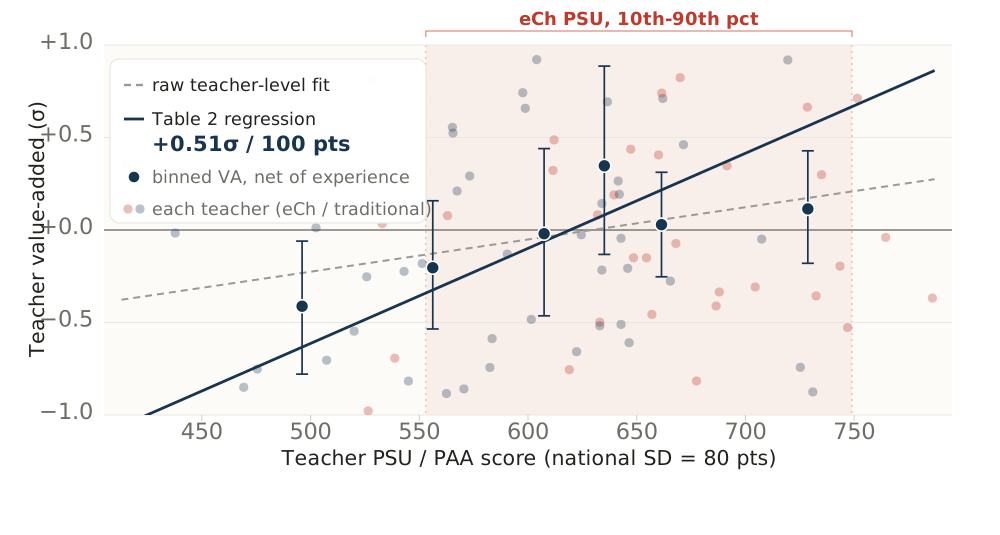
Teachers who scored higher on the PSU/PAA university entrance exam before they ever entered a classroom produce larger learning gains. The gradient is 0.51σ of value-added per 100 exam points, which is 0.41σ per standard deviation of teacher ability, since one standard deviation of the teacher ability distribution is about 80 points.
The shaded band marks the 10th-to-90th percentile range of Enseña Chile recruits' own entrance scores. They sit far to the right of the distribution: pre-college human capital is the dimension on which this group is most unusual.
02
Experience is steep, then flat
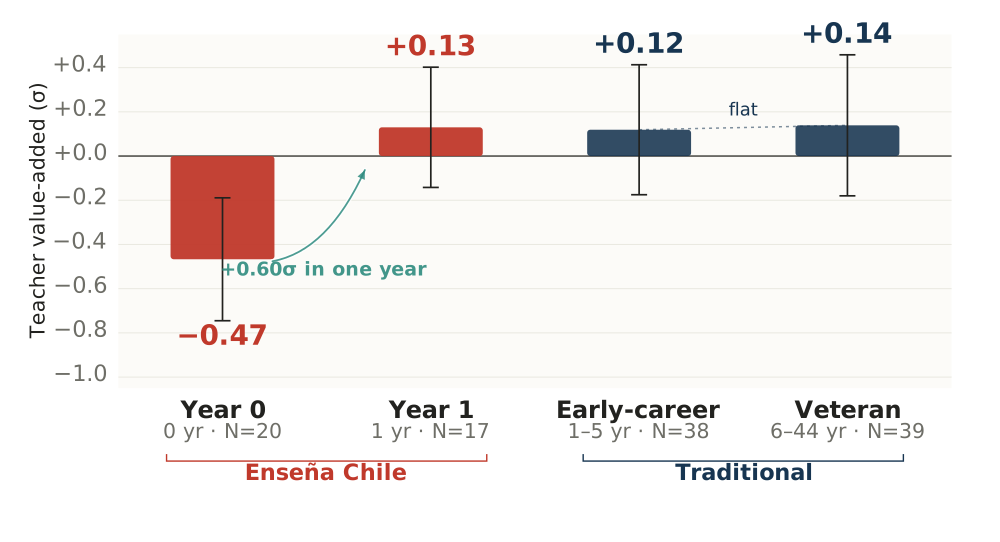
Split by route and career stage, the pattern is asymmetric. First-year Enseña Chile teachers average −0.47σ and second-year teachers +0.13σ, a difference of +0.60σ. Traditional teachers, by contrast, look flat: +0.12σ early-career and +0.14σ veteran.
Because every Enseña Chile teacher in this sample is in year one or year two, any comparison that ignores experience is comparing the steepest part of one profile to the flat part of another.
03
Decomposing the gap
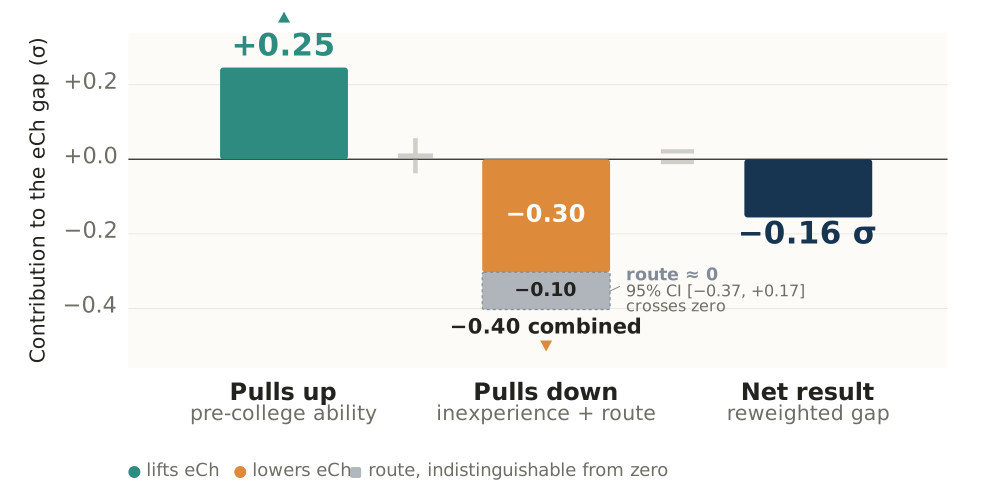
After reweighting the comparison teachers to the national common-support ability distribution, the net gap of −0.16σ splits into three pieces: ability +0.25σ [+0.06, +0.42], inexperience −0.30σ [−0.55, −0.09], and a route remainder of −0.10σ [−0.37, +0.17]. The inexperience interval comes from a cohort-inclusive bootstrap.
Ability works in Enseña Chile's favour and excludes zero. Inexperience works against it and excludes zero. The remainder crosses zero.
04
Recruited at the top, delivering at the middle
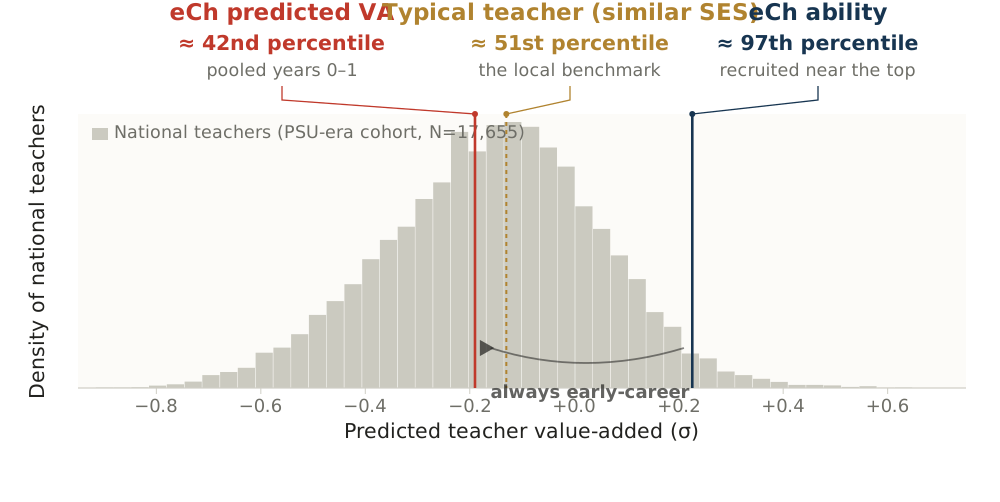
Against a national reference cohort of roughly 17,700 teachers, Enseña Chile recruits sit at the 97th percentile of ability, +1.9 SD above the mean teacher. Their model-predicted value-added sits at the 42nd percentile, against a comparison teacher at the 51st.
The distance between those two positions is what inexperience costs early on: extraordinary selection on pre-college human capital, ordinary predicted performance while the teachers are still in their first two years.